In Highland Park, a city where 45% of residents live in poverty, about 1,400 streetlights were removed in 2011 as part of a settlement with DTE Energy. (Source: Bridge Michigan.) The city didn't choose to go dark. The infrastructure decision was made for them, and residents have been navigating its consequences ever since.
That is energy injustice. Not a vague systemic failure. A specific decision, with a specific address.
Understanding what energy justice means as a concept starts with examples like this one. It ends with asking what it looks like when organizations do something about it.
What Energy Justice Actually Means
The Initiative for Energy Justice (iejusa.org) defines energy justice as achieving equity in both the social and economic participation in the energy system, while also remediating social, economic, and health burdens on those historically harmed by it. (Source: Initiative for Energy Justice.)
That definition has three analytical lenses, each asking a different version of the same question.
Distributional justice asks who pays and who benefits. Low-income households in Detroit spend a larger share of their income on energy than wealthier households while often receiving worse service: more outages, older equipment, less access to solar and efficiency programs. The burden is unequal, and it falls on the people least able to absorb it.
Procedural justice asks who gets a voice in decisions. Michigan Public Service Commission rate-case hearings are where utilities file for price increases and advocates push back. When DTE files a multi-hundred-million-dollar rate increase, their legal teams are prepared. Highland Park residents and Detroit nonprofits often aren't, not because they don't care, but because the process was not designed with their participation in mind.
Recognition justice asks whose history shaped current conditions. The neighborhoods carrying the highest energy burdens today are, in many cases, the same neighborhoods targeted by mid-20th-century redlining policies that concentrated disinvestment in Black communities. The connection between that history and today's infrastructure conditions is documented, not coincidental, and naming it is the precondition for addressing it honestly.
Energy justice is distinct from energy efficiency, though the two are related. Efficiency is a tool. Justice is the question of whether that tool reaches the people who need it most.
Why Detroit Is a Textbook Energy Justice Case
ACEEE research on Detroit's energy burden found that 30% of Detroit households carry a high energy burden, defined as spending 6% or more of their income on energy, compared with about 25% of households nationally. Low-income Detroit households carry a median energy burden of 10.2%. (Source: ACEEE, "Energy Burdens in Detroit," aceee.org/sites/default/files/pdfs/aceee-01_energy_burden_-_detroit.pdf.) To understand what energy burden means and why Detroit exceeds 6% in depth, see our companion article on the metric itself.
Behind those numbers is an infrastructure story. Detroit's low-income neighborhoods run largely on DTE's 4.8-kilovolt distribution grid; wealthier suburbs are served by modern 13.8-kV systems. Power lines and transformers in affected areas are decades past their intended service life, and almost 45% of customers in those areas suffered eight or more hours of service disruptions in 2023. (Source: Planet Detroit, May 2025; Bridge Michigan.)
The redlining connection is documented. Mid-20th-century redlining policies concentrated private and public investment away from Black neighborhoods, the same areas now served by older utility infrastructure. (Source: Planet Detroit, May 2025; Floodlight News.) Detroit's energy burden isn't equally shared across racial lines, and this infrastructure history is a significant part of why.
In June 2026, the Michigan Public Service Commission set a formal goal to reduce energy burden on low-income Michigan households to no more than 6% of household income. (Source: Michigan Public Service Commission, June 11, 2026.) That is a meaningful acknowledgment. It is also not a guarantee. A goal is not a program, and a 10.2% median burden doesn't come down without funded, neighborhood-level work to bring it down.
Highland Park Is Where the Numbers Become People
Highland Park sits inside Detroit but is its own city. Forty-five percent of its residents live in poverty, per Bridge Michigan. The U.S. Department of Energy recognized the city's situation explicitly: Highland Park was selected for the Communities Local Energy Action Program (Communities LEAP), which targets low-income, energy-burdened communities for clean energy access. (Source: Bridge Michigan; DOE.)
The 4.8-kV grid runs through much of the city. That means longer outages when wind or heat stresses the lines. Extended outages mean lost food, lost medication that requires refrigeration, and homes that become unsafe for elderly and chronically ill residents. These are concrete, documentable consequences, not abstractions about energy poverty.
The 1,400-streetlight removal in 2011 is part of the same pattern. Infrastructure disinvestment in Highland Park didn't start with one decision and didn't end with one. The streetlights, the grid age, the rate structure: they form a consistent picture of a community whose energy conditions have been shaped by decisions made outside of it.
Disparity and Injustice Are Different Claims
Detroit's why Detroit energy bills are so high problem is a disparity, measurable and documented. Energy injustice is the argument that the disparity is the result of systematic choices, that those choices violated people's reasonable claims to fair treatment, and that fixing them is an obligation, not a favor.
Distributional injustice in Detroit means that the households paying the highest share of their income for energy are also receiving the oldest infrastructure and the fewest pathways to solar or efficiency improvements. The clean energy transition, if it runs along market lines, risks repeating what the old energy system did: delivering benefits to those already advantaged while leaving the highest-burden households behind.
Procedural injustice means the decision-making processes that set rates and allocate infrastructure investment have historically excluded the communities most affected by those decisions. Rate cases are long, technical, and require sustained legal engagement. Community organizations in Highland Park and East Detroit have challenged this by showing up, filing comments, and pushing for outcomes that reflect their residents' reality. The structural disadvantage remains.
Recognition injustice means the infrastructure disparity is not bad luck or market inefficiency. It is the accumulated result of policies, including redlining, disinvestment, and exclusion from suburban utility buildout, that targeted specific communities. Acknowledging that history is not the same as assigning blame for it. It is, however, the only honest starting point for designing a real remedy.
What Energy Justice Looks Like When It Actually Happens
WWGT's Whole Homes, Whole Communities program is a working answer to the question of what energy justice practice looks like, not in theory but in a specific neighborhood, with a specific funding source and a specific scope of work.
The $8 million in program funding came from a settlement in a DTE case. That origin matters. The same utility whose aging infrastructure and rate structure contribute to the burden in Highland Park and East Detroit is the source of the remediation. This funding represents an acknowledgment that the burden exists and that these communities are owed something. It is a repair, not a handout.
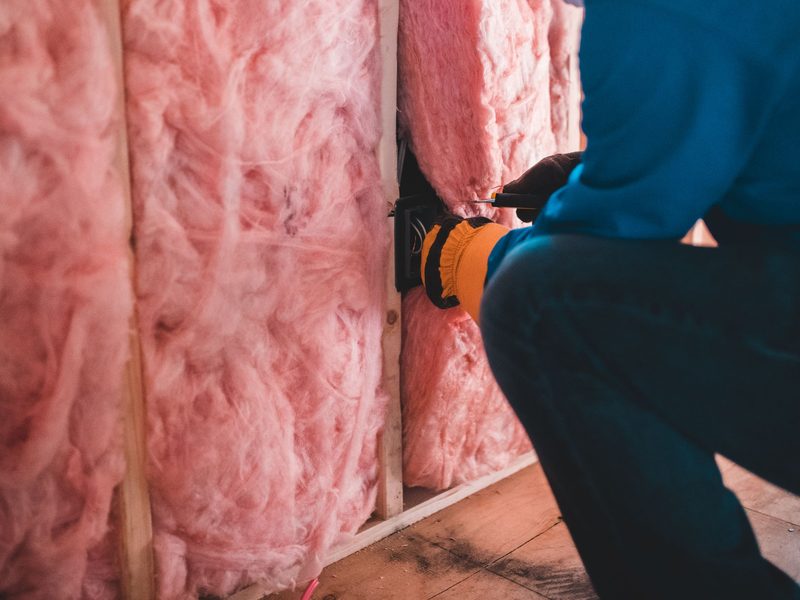
The program delivers free home improvements to qualifying homeowners: insulation, air sealing, equipment upgrades, health and safety repairs, and homeowner education. Free means free, with no cost to the homeowner for the assessment or the work. For households already stretching income to cover utility bills, that distinction is the whole thing. Improvements can reduce energy bills by up to 50%.
The ICAN workforce connection makes the program more than a service delivery model. Through our ICAN Workforce Development program, in partnership with Michigan EGLE, 20 Detroit-area residents have been certified as Building Analysts (BPI BA-T & BA-P). The people assessing and improving these homes are people from these communities. That is distributional and procedural justice operating simultaneously: the program delivers a benefit and builds the local capacity to deliver it.
If you own your home in Highland Park or East Detroit, contact us to find out whether you qualify.
Energy Justice Is Also a Policy Question
The MPSC's June 2026 affordability goal, reducing low-income energy burden to no more than 6% of household income, signals that Michigan's regulatory posture is shifting. (Source: Michigan Public Service Commission, June 11, 2026.) What that shift produces in practice depends on what comes next: enforcement mechanisms, program funding, and whether outreach actually reaches the households carrying the highest burdens.
The Michigan Energy Assistance Program has been expanding its reach. The long-term target is up to 150,000 households, compared with roughly 50,000 historically served. (Source: Michigan Public Service Commission.) Expanded program capacity is necessary. It is not sufficient if the households most in need are also the hardest to reach through government-administered programs.
That is the argument for community organizations with roots in these neighborhoods. Program design and outreach that reaches qualifying homeowners in Highland Park and East Detroit requires knowing the community, maintaining trust, and doing the unglamorous work of connecting eligible households to available resources. Government programs without local intermediaries routinely underperform on that front.
If you want to support that kind of work, support WWGT's programs.
How You Can Be Part of the Answer
Homeowners in Highland Park or East Detroit: if you own your home, you may qualify for free energy improvements through WHWC. Contact us to check eligibility.
Donors and supporters: WWGT demonstrates a specific model, a community-rooted organization doing the physical work of energy justice, not just the advocacy. Every dollar goes toward sustaining programs like WHWC and the trained local workforce behind them. Support WWGT's programs.
People trying to understand the problem: this article is part of the mission too. Public understanding of what energy justice means, and of the gap between a policy goal and a household's actual bill, is how communities build the will to close it.
Frequently Asked Questions
What is the difference between energy justice and energy equity?
Energy equity describes the goal: a distribution of energy costs and benefits that is fair. Energy justice names the system failure, the history of decisions that produced the current inequity, and the obligation to correct it. Equity is the destination; justice is the argument that we have to get there, and why.
What is energy burden, and what percentage is considered high?
Energy burden is the share of household income spent on utility bills. Six percent or more is the threshold for "high energy burden," per ACEEE and the U.S. DOE LEAD Tool. ACEEE research on Detroit found that low-income households in the city carry a median energy burden of 10.2%. (Source: ACEEE, "Energy Burdens in Detroit," aceee.org/sites/default/files/pdfs/aceee-01_energy_burden_-_detroit.pdf.) Our article on what energy burden means and why Detroit exceeds 6% goes deeper on how that figure is calculated and what drives it.
Does redlining still affect energy access in Detroit?
Yes. The neighborhoods carrying the highest energy burdens and served by the oldest utility infrastructure are largely the same neighborhoods targeted by mid-20th-century redlining policies. The connection between historical disinvestment and current infrastructure conditions is documented. (Source: Planet Detroit, May 2025; Floodlight News.)
Is Highland Park part of the DOE Communities LEAP program?
Yes. The Department of Energy selected Highland Park for the Communities Local Energy Action Program (Communities LEAP), which targets low-income, energy-burdened communities for clean energy access. (Source: Bridge Michigan; DOE.)
How do I find out if I qualify for free home energy improvements?
Contact us. We can tell you whether your address falls within the current WHWC service area and where enrollment stands.
We Want Green Too is a Detroit-based 501(c)(3) nonprofit, EIN 45-5324148, founded in 2007 by Gloria J. Lowe. We work on energy-efficient, healthy housing and green-economy careers for Detroit residents and veterans. Visit us at wewantgreentoo.com.