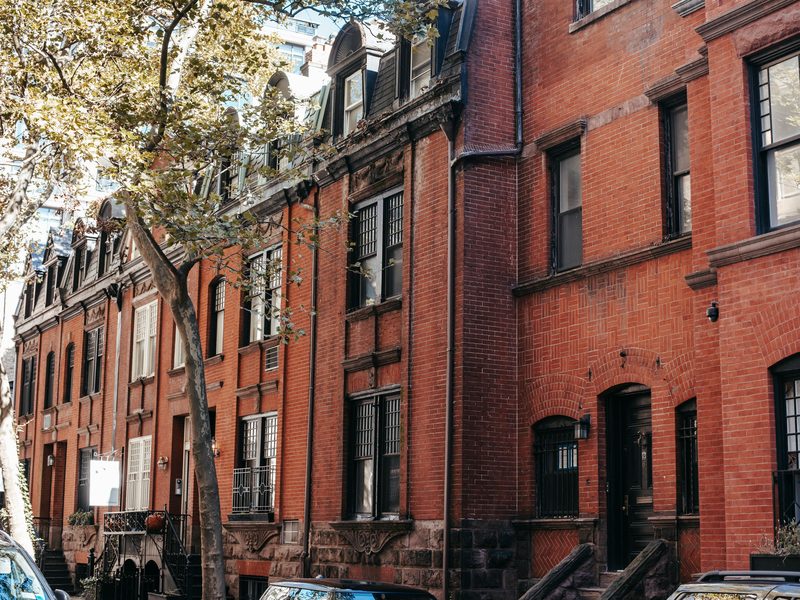
Much of Detroit's housing stock predates modern building codes, and most of it is still running on its original insulation with walls that have never been weatherized. When a furnace runs three hours to warm a house that should need two, the difference shows up in the utility bill every month. Free weatherization programs exist to fix that, but the paperwork can be confusing and the program names overlap. This article cuts through it: what weatherization actually does to your house, what income levels qualify, what can block a home from being eligible, and the two main free pathways available to Detroit-area residents.
What Weatherization Actually Means for Your Home
Weatherization is a performance intervention on the building shell and its mechanical systems. The goal is to reduce how much energy the home needs to stay at a livable temperature — not to cosmetically improve it, and not to address every repair the house needs.
This distinction matters. A weatherization program won't replace a rotting porch or rewire your kitchen. What it will do is find and stop the specific energy losses that drive bills up: heat escaping through the attic, cold air seeping in around pipe penetrations, a furnace running harder than it should because ducts are uninsulated.
Detroit's older housing stock makes weatherization especially high-impact. Homes built before modern building codes have no vapor barriers, compressed or missing insulation, and gaps around every penetration in the building envelope. If you want to understand how why Detroit energy bills are so high connects to housing age, that piece covers the energy burden statistics in detail. This article focuses on what gets fixed and how.
What a Weatherization Program Covers — Measure by Measure
Building shell insulation. Wall cavities, attic, ceiling, floor, and foundation can all receive insulation depending on what's missing or degraded. Attic insulation typically comes first in Michigan's climate because heat rises, and an uninsulated attic is one of the fastest routes out of the house. Adding attic insulation alone often delivers the largest single-measure savings in an older Detroit home.
Air sealing. A blower door test pressurizes the house to find where conditioned air is escaping. Technicians then seal gaps around pipes, wires, recessed lights, and electrical boxes. Air sealing and insulation are distinct measures — air sealing stops infiltration, insulation slows heat transfer — but they work better together. Standard practice is to do both in the same sequence because each amplifies the other.
Heating systems. WAP includes furnace and boiler cleaning, tuning, and repair. Where equipment is beyond repair, replacement is on the table. Duct insulation and programmable thermostat installation also fall within scope.
Water heaters. Repair or replacement of inefficient or failing water heaters, plus pipe and tank insulation.
Health and safety measures. Before or alongside any insulation work, WAP requires combustion appliance safety testing — checking that gas appliances aren't backdrafting carbon monoxide into the living space. Mechanical ventilation is addressed where air sealing would otherwise create air-quality problems, and smoke and CO detector installation is included. (Source: U.S. Department of Energy, Weatherization Assistance Program guidance at energy.gov/cmei/scep/wap/weatherization-assistance-program.)
Electric baseload. Efficient lighting and, in some cases, refrigerator replacement where an old unit is pulling significant standby energy.
What WAP does not cover. Standalone structural roof repairs, general plumbing, and general electrical work are outside the program's scope. This is an energy-efficiency program, not a whole-home repair program. (Source: Wayne Metro Community Action Agency, waynemetro.org/weatherization/.) If a home has conditions that require those kinds of repairs first, a different program may need to go first — more on that under deferral conditions below.
WHWC goes further. We Want Green Too's Whole Homes, Whole Communities program covers insulation, air sealing, and equipment upgrades alongside clean energy improvements and homeowner education, funded by $8 million secured through a DTE Energy case settlement. The education component is part of the design — homeowners who understand what was done and why tend to hold the savings.
Who Qualifies: Income, Household, and Home Conditions
WAP income standard. The Michigan Weatherization Assistance Program covers households with income at or below 200% of the federal poverty level — that's the national DOE standard (Source: U.S. Department of Energy, energy.gov/cmei/scep/wap/how-apply-weatherization-assistance) and is confirmed by Michigan MDHHS documentation. Wayne Metro Community Action Agency, which administers WAP for Wayne County, publishes dollar-amount income thresholds that may reflect a stricter local figure. Confirm the current thresholds directly with Wayne Metro (waynemetro.org/weatherization/) before applying.
Auto-eligibility. Households already receiving certain public benefits qualify automatically, without separate income documentation. Wayne Metro's confirmed list includes SSI, the Family Independence Program (FIP), State Disability Assistance (SDA), TANF, FAP/SNAP, and SER — see Wayne Metro for the current complete list. (Source: Wayne Metro Community Action Agency, waynemetro.org/weatherization/.)
Renters can apply. Both homeowners and renters are eligible for WAP, but the weatherization provider must obtain landlord permission before any work begins. (Source: U.S. DOE, energy.gov/cmei/scep/wap/how-apply-weatherization-assistance; Wayne Metro Community Action Agency for local documentation requirements.)
Priority populations. Households with elderly members, people with disabilities, and families with children may receive priority under WAP, as may high-energy users and households with a high energy burden. Confirm priority handling with your local agency. (Source: U.S. DOE, energy.gov/cmei/scep/wap/how-apply-weatherization-assistance.)
WHWC eligibility. WWGT's program focuses on Highland Park and East Detroit homeowners and is funded through the DTE settlement rather than income-based federal appropriations. No specific income means test for WHWC has been publicly stated. Contact us to find out if your address falls within the current active service area.
Conditions That Can Block a Home — and What to Do
Some homes can't receive weatherization until underlying conditions are resolved first. These are called deferral conditions, and they're not rare in Detroit's older housing stock.
Common WAP deferral conditions include: - A damaged roof that would trap moisture behind new insulation - Asbestos requiring abatement before work can proceed - Active knob-and-tube wiring - Visible mold or standing water in the basement - Major infiltration gaps — missing drywall, open window openings - Homes already weatherized under WAP within the past 15 years
(Source: Wayne Metro Community Action Agency, waynemetro.org/weatherization/.)
A deferral isn't a dead end. Some of the conditions that block WAP — roof damage, mold, structural problems affecting indoor air quality — are exactly what WWGT's Whole Homes, Whole Communities and Healthy Home Production programs address. If your home is deferred from WAP, contact us to talk through what other pathways might apply. Homes listed for sale, in active foreclosure, or mid-remodel are typically ineligible during that period as well.
The WHWC Pathway: Free Weatherization Through WWGT
WWGT's Whole Homes, Whole Communities program is a four-year initiative serving Highland Park and East Detroit homeowners, funded by $8 million secured through a DTE Energy settlement. Free means free — no cost to homeowners for the assessment or the work.
What distinguishes WHWC from baseline WAP is scope. In addition to insulation, air sealing, and equipment upgrades, WHWC includes clean energy improvements and homeowner education. That education piece isn't a formality — understanding how the improvements work and how to maintain them is what makes the savings hold.
The workforce doing this work matters too. The Building Analysts assessing WHWC homes hold BPI BA-T and BA-P certifications, trained and certified through Michigan EGLE under our ICAN Workforce Development program. We certified 20 Detroit-area residents through ICAN. The people doing this work come from the communities being served, and the skills they've built stay here.
Program capacity is limited. WWGT works through neighborhoods systematically, not on a rolling first-come-first-served basis across the entire service area. To find out where enrollment stands and whether your address is currently in the active zone, contact us directly.
How to Apply: WAP vs. WHWC
The WAP path. Contact Wayne Metro Community Action Agency — the designated WAP operator for Wayne County. Michigan's Helping Hand map at michigan.gov/helpinghand/housing/weatherization/state-map-of-weatherization-operators can connect residents to the right local agency if you're outside Wayne County. The agency schedules an energy audit, verifies income documentation, and queues the home for work. (Source: Michigan.gov Helping Hand; Wayne Metro Community Action Agency.)
The WHWC path. Contact WWGT at wewantgreentoo.com/contact.php. We confirm whether your address is within the current active service area and where enrollment stands.
Both paths are free. Neither involves upfront payment.
For renters: WAP is available, but your landlord must agree to the work in writing before anything is scheduled. WHWC is homeowner-focused.
What to have ready when you apply: Recent pay stubs or proof of benefit enrollment for WAP income verification; your address for WHWC service area confirmation.
What to Expect When Work Begins
Everything starts with an energy audit. A trained auditor visits the home, runs a blower door test, checks combustion equipment, and inspects attic, walls, basement, and crawl spaces. That assessment determines which measures will deliver the most savings for that specific house — the sequence isn't the same for every home. (Source: U.S. DOE, energy.gov/cmei/scep/wap/weatherization-assistance-program.)
Work is sequenced deliberately. Health and safety items come first — combustion equipment must be checked and any CO issues resolved before insulation goes in. Air sealing and insulation are typically done in the same phase because each makes the other more effective.
After the work, an inspector verifies the job against state standards. Under WHWC, homeowner education follows so residents understand what was improved and how to keep it working.
The expected outcome: energy bills can drop by up to 50%, depending on the home's starting condition, what upgrades are made, and how the house is used. For a household in an older Detroit home that has never been weatherized, that's a meaningful difference.
If you want to understand more about the audit process itself before you apply, see what happens during a home energy audit.
Frequently Asked Questions
Does weatherization cover windows and doors?
Standard WAP can include window or door repair and storm window installation, but standalone structural window replacement — replacing all windows with new units — is generally not covered. Confirm the specific scope with your WAP operator, since what's approved can depend on the home's overall energy audit results.
Can renters get free weatherization in Detroit?
Yes, through WAP. Your landlord must provide written consent before work is scheduled. Contact Wayne Metro Community Action Agency to begin the application. WHWC is a homeowner program.
What if my house has a damaged roof — am I out of options?
A damaged roof is a WAP deferral condition because new insulation behind a leaking roof can trap moisture and cause damage. But a deferral from WAP doesn't mean no help exists. WWGT's programs address health and structural conditions alongside energy work. Contact us to talk through your situation and what program sequence might work for your home.
Is WWGT's WHWC program the same as WAP?
No. WHWC is a separate initiative funded by an $8 million settlement, serving Highland Park and East Detroit homeowners. It goes beyond standard WAP scope to include clean energy improvements and homeowner education. Both are free; they serve overlapping but distinct populations and geographies. If you live in the WHWC service area and own your home, you may be eligible for WHWC regardless of WAP status.
Check your eligibility for Whole Homes, Whole Communities
Contact us to apply or ask about your address
We Want Green Too is a Detroit-based 501(c)(3) nonprofit, EIN 45-5324148, founded in 2007 by Gloria J. Lowe. We work on energy-efficient, healthy housing and green-economy careers for Detroit residents and veterans. Visit us at wewantgreentoo.com.