The utility bill doesn't care who lives in the house. But the data shows it lands differently depending on the neighborhood — and in Detroit, the neighborhood correlates closely with race.
We Want Green Too has been doing home repair and energy efficiency work in Highland Park and East Detroit since 2007. We work in the neighborhoods where energy burden is highest. That gives us a particular view of what the numbers mean on the ground, and why this disparity doesn't fix itself.
What Detroit's Energy Burden Data Actually Shows by Race
Energy burden is the share of household income spent on utility bills. A burden of 6% or more is considered high, per the American Council for an Energy-Efficient Economy (ACEEE) and the U.S. DOE LEAD Tool.
In Detroit, that threshold is not a distant edge case. A September 2024 ACEEE analysis found that 30% of Detroit households carry a high energy burden — a figure that stands out across the 36 metropolitan areas ACEEE analyzed in that report. (Source: ACEEE, September 2024.)
The racial distribution of that burden is stark. Black households in Detroit carry a median energy burden of 5.3%. Low-income households — a category with significant overlap — carry a median of 10.2%. One in four Black Detroit households spent more than 8.8% of their income on energy, well above the high-burden threshold. Both figures are higher than the burdens documented for the metro population overall. (Source: ACEEE, September 2024.)
Those aren't different utility systems producing these outcomes. It's the same DTE territory, the same rate schedule, the same city. The structural differences that produce different results are what this article is about.
Two Systems Inside One Utility Territory: The Grid Infrastructure Divide
Investigative reporting published by Planet Detroit and Floodlight News in May 2025 documented something that helps explain the disparity at the infrastructure level.
Many low-income Detroit residents receive power through DTE Energy's older 4.8-kilovolt distribution system. Wealthier, whiter suburbs access a more modern 13.8-kilovolt grid. The voltage difference isn't just a technical footnote. The older system is less capable of handling peak demand, more prone to disruption, and — critically — limits what efficiency upgrades are even possible. Rooftop solar, battery storage, and EV charging infrastructure all require grid capacity that the 4.8kV system can't reliably support. Residents in older infrastructure zones can't access the efficiency tools that would most directly reduce their bills. (Source: Mario Alejandro Ariza, Planet Detroit / Floodlight News, May 2025.)
The reliability data reflects this divide. Nearly 45% of Detroit DTE customers experienced eight or more hours of service disruptions in 2023. DTE has since reported a 70% reliability improvement from 2023 to 2024 — those two figures exist in tension, and both are worth noting. (Source: Planet Detroit, May 2025.) A 2023 study published in Nature Communications found that counties experiencing the most severe outages nationally had significantly higher minority populations than other counties — a national pattern consistent with the grid infrastructure disparities investigative reporters documented in Detroit.
This infrastructure gap is a separate mechanism from housing age or income level. It means that even a homeowner who does everything right — insulates, air-seals, tries to add solar — runs into constraints that a suburban homeowner in the same metro area doesn't face.
How Redlining Built the Housing Stock That's Still Driving the Gap
The physical infrastructure of the grid didn't develop in isolation. Neither did the housing stock.
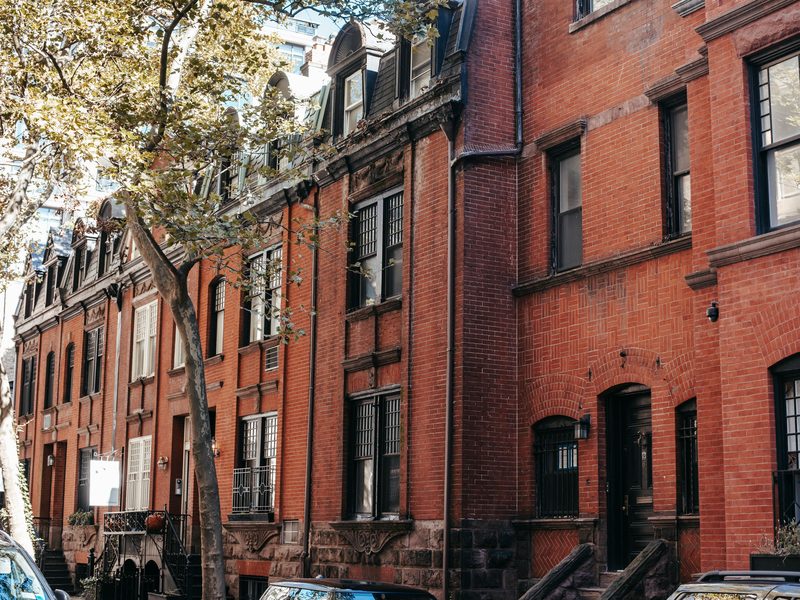
Historical redlining concentrated Black Detroiters in neighborhoods where older, less efficient housing was the only available option. The consequences compound across generations. Homes in formerly redlined areas tend to be older construction predating modern insulation and air-sealing standards, often carrying decades of deferred maintenance: failing roof assemblies that can't support solar panels, outdated wiring incompatible with modern heating systems, and walls that have never seen a blower door test. (Source: Planet Detroit / Floodlight News, May 2025.)
A 2023 peer-reviewed study in Energy Economics found that Black households bear a higher energy burden than income alone explains. The excess burden is driven substantially by greater demand for space heating in less-efficient homes — meaning the housing stock itself is doing real work in creating the racial gap, not just the income disparity. (Source: Energy Economics, 2023. National finding, not Detroit-specific.)
The three mechanisms layer onto the same households in the same neighborhoods. Less efficient housing raises how much energy a household needs. Older grid infrastructure raises the risk of disruption and limits access to renewable upgrades. Lower incomes reduce the ability to absorb either. Highland Park and East Detroit — the communities where WWGT works — sit at that intersection.
Shutoffs: When the Burden Becomes a Crisis
The energy burden data measures a chronic condition. Utility shutoffs measure what happens when the chronic condition becomes acute.
DTE disconnected 150,000 customers in 2024 — most during summer — while paying $607 million to shareholders. In the fourth quarter of 2024 alone, there were 47,817 shutoffs. Of those, 37,767 accounts were restored during that quarter, but only 874 of those restorations came through households receiving assistance. (Source: Planet Detroit / DCReport, 2025.)
The geography of shutoffs maps onto the geography of energy burden. The inability to pay isn't randomly distributed; it concentrates in the same neighborhoods already documented as carrying the highest burden. Race and income and housing quality and grid reliability all converge at the same addresses.
The policy environment has made this harder. The Trump administration fired LIHEAP's entire program staff in April 2025 and proposed eliminating the program — putting hundreds of millions in FY2025 assistance funds at risk for households already at the margin. That's a documented policy development with direct consequences for Detroit households that relied on that assistance.
What Efficiency Repair Actually Does in These Neighborhoods
Programs that help with utility bills through assistance payments address one part of the problem. They help a household pay what it currently owes. They don't change how much the household owes next month.
Whole-home efficiency repair works differently. It reduces how much energy the home needs in the first place. That's a permanent change to the underlying condition, not a one-time offset.
Our Whole Homes, Whole Communities program is a four-year initiative in Highland Park and East Detroit. We secured $8 million in funding through a settlement in a DTE case. That money goes directly into free home repairs — insulation, air sealing, equipment upgrades, health and safety fixes — for qualifying homeowners in these neighborhoods, at no cost to them. Program improvements can reduce household utility bills by up to 50%.
The mechanism matters for racial equity specifically because it addresses the housing-stock problem directly. It doesn't require the utility to act. It works inside the home, on the physical conditions that redlining built and deferred maintenance sustained.
The workforce doing this work matters too. Through our ICAN Workforce Development program, in partnership with Michigan EGLE, we certified 20 Detroit residents as Building Analysts holding BPI BA-T and BA-P credentials — nationally recognized certifications. These are trained people from these communities, doing the assessments in these neighborhoods. The expertise doesn't get imported and then leave. The Healthy Home Production program runs alongside, focused on reducing indoor pollutants and making Detroit's housing safer to live in — because health costs and energy costs are bound together in these same homes.
What Would Actually Change the Equation
The energy justice issues in Detroit are structural, and the systemic solutions are systemic: grid modernization in legacy neighborhoods, utility rate design that doesn't disproportionately burden low-income customers, restored and expanded weatherization funding, and reinstated LIHEAP. Understanding what energy burden means and why Detroit's rates are so high is the starting point for the policy conversation.
For Highland Park and East Detroit homeowners right now, there's a direct path. If you own your home and live in one of these communities, the WHWC program may cover free repairs that directly reduce your bills. Contact us to find out if your home qualifies.
For donors and funders: the racial energy burden in Detroit isn't closing on its own. The grid disparity, the housing stock, the shutoff data — these are documented, structural, and persistent. WWGT runs programs that directly address these conditions through repair, not rhetoric. Read more about why Detroit energy bills are so high to see the full cost picture. Then support WWGT's work if you're ready to put resources behind programs that are already operating in these neighborhoods.
Frequently Asked Questions
Why is the energy burden higher for Black households in Detroit?
Three factors work together. First, historical redlining concentrated Black Detroiters in older, less efficient housing that requires more energy to heat and cool. Second, investigative reporting from 2025 documented that many low-income Detroit neighborhoods receive power through DTE's older 4.8-kilovolt distribution system rather than the newer 13.8kV grid serving wealthier suburbs — a difference that affects reliability and limits access to solar and storage upgrades. Third, lower incomes mean a larger share of household budget goes to utility costs that are the same in dollar terms but larger in proportion. (Sources: ACEEE, September 2024; Planet Detroit / Floodlight News, May 2025.)
What is the median energy burden for Black households in Detroit?
ACEEE's September 2024 analysis found that Black households in Detroit carry a median energy burden of 5.3%. One in four Black Detroit households spent more than 8.8% of income on energy — above the ACEEE high-burden threshold of 6%. Low-income Detroit households, a category with significant overlap, carry a median burden of 10.2%.
What programs help Detroit residents with high energy bills?
WWGT's Whole Homes, Whole Communities program provides free home repairs — insulation, air sealing, equipment upgrades, health and safety fixes — at no cost to qualifying homeowners in Highland Park and East Detroit. Other options include the Michigan Energy Assistance Program (MEAP), the Michigan Weatherization Assistance Program (WAP), and DTE's customer assistance and energy efficiency programs. Contact us directly to ask about WHWC enrollment.
We Want Green Too is a Detroit-based 501(c)(3) nonprofit, EIN 45-5324148, founded in 2007 by Gloria J. Lowe. We work on energy-efficient, healthy housing and green-economy careers for Detroit residents and veterans. Visit us at wewantgreentoo.com.