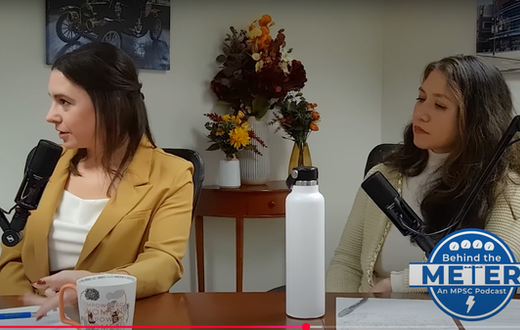
This month's Behind the Meter episode of the MPSC podcast covered the topic of safe digging — hosted by Mark Burn, the commission's chief operating officer, and featuring MPSC Chair Dan Scripps and the MPSC's Director of the Gas Safety & Operations Division, Dave Chislea.
Not so surprisingly, underground utility facilities and pipeline safety aren't things the average citizen usually considers day to day. Director Chislea alleviates that burden for the common Michigander with critical work: conducting pipeline safety inspections and reviewing the commission's new pipeline infrastructure applications. His division is also involved in rate cases — reviewing utilities' rate-increase proposals related to operations and maintenance expenses — and investigates issues related to preventing damage to all underground infrastructure in the state.

Vital underground utilities include municipal facilities like water and sewer, communications and telecom lines that serve 911 dispatch and airports, and the electricity and natural-gas infrastructure that could cause service disruptions, electrocution, or personal injury if disturbed.
It's there literally beneath our feet, and I think we take it for granted — but these can be inherently dangerous if they're not treated with the respect they deserve. — MPSC Chair Dan Scripps
It's insightful to hear that an act as seemingly simple as pitching a tent, installing a fence, or planting a tree could damage buried utility lines and cause harm. That brings the discussion to MISS DIG — a data center and statewide service for Michiganders to alleviate safety concerns about potential damage to underground infrastructure.
Have you ever noticed little yellow or red flags, or thin painted lines in the grass? Those markings indicate where infrastructure is buried, so it can be avoided. Professional contractors — and even residents — call MISS DIG; data is collected for the digging project, and MISS DIG contacts the appropriate utility to make its markings. 'MISS DIG is also responsible for education,' Chislea shares. 'You may see the billboards on the sides of roads or other information. They educate excavators across the state.'
Michiganders are required to call three business days before digging. Following the steps is especially important when using power tools, and is essential for professionals and residents alike doing smaller DIY projects.
'Annually there are about 4,000 damages to underground natural-gas distribution systems a year,' Dave emphasizes. 'Of those 4,000 in 2024, over 1,200 were related to no call to MISS DIG — and of those 1,200, over 400 were homeowners.'
The consequences for failing to call 811 and damaging underground infrastructure are substantial: a fine of up to $5,000 for the first offense, plus potential billing from the utility for associated repairs. Excavators can also be penalized for not 'hand-exposing' before digging — after markings are made, the digger must verify them by hand, uncovering the buried piping or line before digging. Utilities, too, can be fined for failing to complete their markings in response to an 811 call, not doing so in a timely manner, or marking inaccurately.
This episode makes ratepayers aware of some of the less prominent but equally critical work of the MPSC and its staff — work directly connected to the rate-case process, giving us insight into the inextricable connections of energy and its infrastructure.