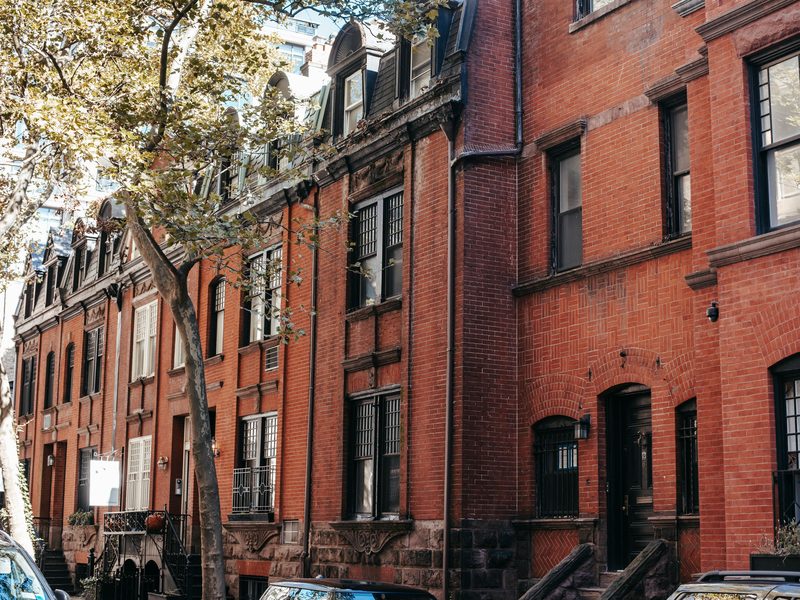
Most of the houses in Highland Park were built before modern insulation codes existed. Walls with no vapor barrier. Attics with fiberglass compressed to a fraction of its rated R-value. Gaps around pipes wide enough to feel a draft. These aren't cosmetic problems. They're the reason utility bills climb every winter and stay high.
A home energy audit identifies these losses precisely, before any money is spent on upgrades. Done right, it turns a vague sense that the house is inefficient into a specific, prioritized repair plan. This article explains what a professional audit actually involves, what you'll receive at the end, and how qualifying homeowners in Highland Park and East Detroit can get one at no cost through WWGT's Whole Homes, Whole Communities program.
What a Home Energy Audit Actually Is (and What It Isn't)
A utility company's online self-assessment tool asks whether you have a programmable thermostat and whether your appliances are ENERGY STAR rated. A professional home energy audit is something else entirely.
A trained Building Analyst comes to the house with calibrated equipment, spends several hours running diagnostic tests, and produces a written report — a prioritized list of what to fix, in what order, with estimated performance outcomes. The output isn't a menu of upgrades to browse. It's a scope of work built on measured data from your specific home.
Credentials matter here. A BPI-certified Building Analyst is trained to a national standard. BPI's certification program — approved by the U.S. Department of Energy for the Energy Efficient Home Improvement Credit and the State Energy Office Contractor Training Grant Program — covers air leakage diagnostics, combustion safety testing, and energy modeling. (Source: Building Performance Institute, bpi.org.) Someone without that training can walk through your house and call it an assessment. That's not the same thing.
The audit is also the foundation. Upgrades without one are guesswork — you might add attic insulation above an air barrier that isn't sealed, and the insulation does half the work it should.
Before the Auditor Arrives: What to Prepare
Pull twelve months of utility bills if you have them. The analyst uses billing history to benchmark the home's actual energy use against its size, condition, and occupancy — it's one of the first things they'll ask for.
Make note of anything that hasn't felt right: rooms that won't stay warm, condensation on interior window surfaces, smells near the furnace or water heater, months when the bill spiked without explanation. These complaints point the analyst toward specific areas to investigate.
Make sure the attic hatch, basement, and utility areas are accessible before the appointment.
You do need to be home during the audit. BPI's ANSI/BPI-1200 standard requires combustion appliances to be tested at steady-state operating conditions for combustion safety testing, which means they need to be running — and that requires someone present to operate them. (Source: Building Performance Institute, ANSI/BPI-1200-S-2017.)
The Three Core Diagnostic Tests
Blower door test. A calibrated fan is mounted in an exterior doorframe and used to depressurize the house to a standard pressure difference. The total air leakage rate tells the analyst how much conditioned air the home is losing. Then, with the fan still running, the analyst walks the house to locate where the air is moving: around electrical outlets, plumbing penetrations, attic hatches, rim joists. In Detroit's older housing stock, the results are rarely good. (Source: Building Performance Institute; U.S. DOE Energy Saver.)
Combustion safety testing. Every gas appliance — furnace, water heater, range — is tested for carbon monoxide output at steady-state operation and checked for backdrafting. This isn't optional. A furnace that vents CO into the living space is a health and safety failure, and it has to be addressed before energy improvements proceed. BPI's ANSI/BPI-1200 standard governs how this test is conducted. (Source: Building Performance Institute, bpi.org.)
Thermal imaging. An infrared camera makes heat loss visible. A cold spot in the attic floor means insulation is missing or compressed. A streak across a wall cavity means a gap in the air barrier is letting conditioned air escape. The thermal camera confirms what the blower door quantifies, and together they turn invisible losses into a repair map. (Source: U.S. DOE Energy Saver; Building Performance Institute.)
The analyst also records square footage of each zone, existing insulation R-values, equipment ages and efficiency ratings, window types, and duct condition. That data goes into the written report.
How Long It Takes and What You Receive
A thorough professional audit typically runs two to four hours, depending on the home's size and condition. Older Detroit homes with complex attic configurations or multiple HVAC zones can take longer.
At the end, you receive a written report with a prioritized scope of work: which improvements produce the most savings for the least cost, in what order to do them. Health and safety items — combustion issues, ventilation deficiencies, moisture — are flagged separately because they have to be addressed before or alongside energy work.
A good report tells you what to fix, in what order, and roughly what to expect in savings. It's a document you can take to a contractor or, in the case of WWGT's program, hand directly to the team doing the work.
Who Performs WWGT's Audits — and Why Credentials Matter
Through WWGT's ICAN Workforce Development program, in partnership with Michigan EGLE, we certified 20 Detroit-area residents as Building Analysts at two tiers.
BPI BA-T (Building Analyst Technician) covers the field diagnostic work: blower door tests, combustion safety checks per ANSI/BPI-1200, infrared thermography, and field data collection.
BPI BA-P (Building Analyst Professional) builds on BA-T with energy modeling and analysis of the full work scope. The U.S. Department of Energy recognizes BA-P as "Energy Skilled" in the Single Family Home Energy Audit category. (Source: U.S. DOE Building Science Education Solution Center; Building Performance Institute.)
These are Detroit residents who earned nationally recognized credentials and know this housing stock. They grew up in these neighborhoods. The work gets done right because of that — not in spite of it.
For more on how ICAN connects residents to green-economy careers, see Green Energy Jobs in Detroit: Training, Careers, and a Path for Veterans.
How to Get a Free Home Energy Audit in Detroit Through WHWC
WWGT's Whole Homes, Whole Communities initiative includes a full professional home energy assessment at no cost to qualifying homeowners in Highland Park and East Detroit.
The $8 million in WHWC funding was secured through a settlement in a DTE rate case. That money goes back into these neighborhoods as free assessments, free repairs, and homeowner education.
Free means free. No charge for the assessment. If the home qualifies for the full program, the improvements — insulation, air sealing, equipment upgrades, health and safety repairs — are covered through program funding. The audit is the starting point for every participating home, so the work scope is built on real data, not assumptions.
Whole-home efficiency retrofits can cut utility bills by up to 50%. The audit is what makes it possible to capture that savings reliably, because it identifies where the losses actually are.
Homeowner education is woven into WHWC. Understanding what was done and why is part of what makes the savings hold year after year.
If you live in Highland Park or East Detroit and own your home, contact us to find out if your address qualifies.
What Happens After the Audit
For homeowners in WHWC, the audit report drives the actual repair work. Health and safety items come first: combustion issues, ventilation problems, moisture. Energy improvements follow in the order the audit recommends — air sealing before insulation, because insulation over unsealed gaps underperforms. Equipment upgrades come after the building envelope is addressed, so the new equipment is sized correctly for the home's actual heat load.
The assessment and the improvement are part of the same program. There's no gap between the findings and the follow-through.
For a detailed look at what WHWC covers from repair to completion, see Detroit Home Weatherization: What's Covered and How to Qualify.
If You Don't Qualify for WHWC: Other Free or Low-Cost Paths in Michigan
WHWC serves a defined area, and program capacity is limited. If you're outside the current service area or don't qualify, two other pathways may be available:
- Michigan Weatherization Assistance Program (WAP) — free weatherization for income-qualifying households, administered through local community action agencies. Includes an assessment as part of the weatherization process. (Source: Michigan MDHHS, michigan.gov/mdhhs.)
- DTE Energy Efficiency Assistance (EEA) — free energy efficiency upgrades for qualifying DTE customers, with an assessment component that includes blower door testing, combustion safety testing, and thermal imaging. (Source: DTE Energy, dteenergy.com.)
Eligibility criteria, service areas, and program capacity vary. Contact each program directly to confirm current availability.
For more on these programs and the broader energy burden in Detroit, see Why Detroit Energy Bills Are So High — and What's Behind the Gap. That article covers these assistance programs at a summary level; contact the programs directly for current eligibility and enrollment status.
Frequently Asked Questions
Do I need to be home during a home energy audit?
Yes. Combustion safety testing requires gas appliances to be at operating temperature, and the analyst needs access to every part of the house — attic, basement, utility areas. Plan for two to four hours.
Is a home energy audit free in Detroit?
For qualifying homeowners in Highland Park and East Detroit, WWGT's Whole Homes, Whole Communities program includes a full professional audit at no cost — blower door, combustion safety testing, and thermal imaging, performed by BPI-certified Building Analysts. Other Michigan programs, including WAP and DTE's Energy Efficiency Assistance program, may also offer free or reduced-cost assessments depending on income and location. Contact us to find out if your address is in the current WHWC service area.
What's the difference between BPI BA-T and BA-P?
BA-T (Building Analyst Technician) covers field diagnostic work — blower door testing, combustion safety checks, and data collection. BA-P (Building Analyst Professional) builds on that with energy modeling and full work scope analysis. The DOE recognizes BA-P as "Energy Skilled" in the Single Family Home Energy Audit category. ICAN's 20 certified analysts hold both credentials.
We Want Green Too is a Detroit-based 501(c)(3) nonprofit, EIN 45-5324148, founded in 2007 by Gloria J. Lowe. We work on energy-efficient, healthy housing and green-economy careers for Detroit residents and veterans. Learn more about our programs or support WWGT's work at wewantgreentoo.com.